公開
JANOG53 NETCON 問題解説 (level 4-2):iBGP と LVS
SONiC と cEOS の iBGP・ECMP で到達性を確保し、LVS のセッションパーシステンスで複数の認証接続を同じサーバーへ届ける問題を解説します。

目次
JANOG53 では NETCON の作問や採点回りを担当しました。 こちらのブログでは、level 4-2 の問題について解説します。
level 4-2 問題の概要
トポロジ
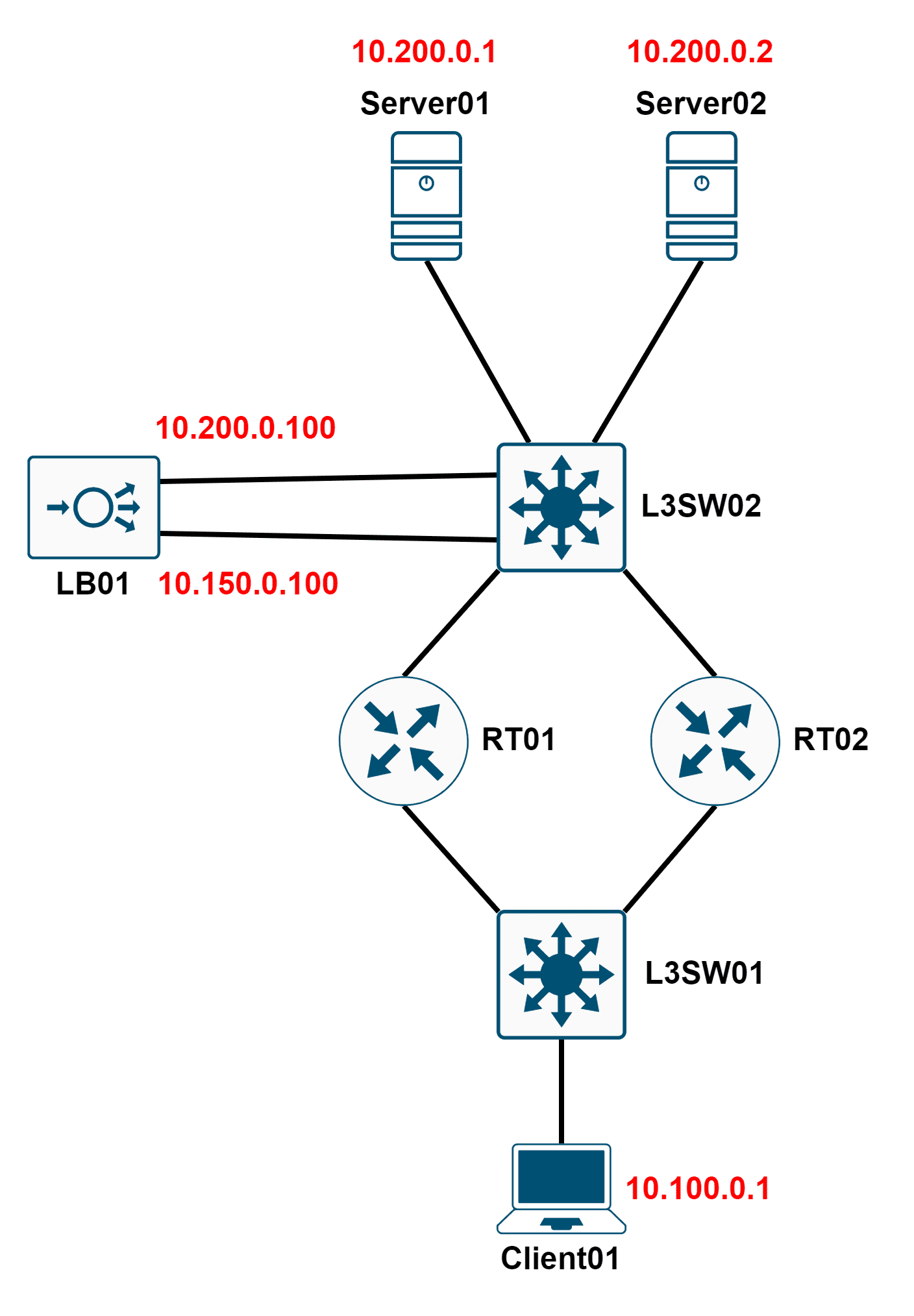
問題文
LB01 の配下に認証用の Server を冗長化して設置し、Client01 から LB01 の Frontend IP (10.150.0.100) に対して認証用の通信を行います。
認証用の通信は複数のコネクションを張る必要がありますが、仕様上すべてのコネクションが同じ Backend Server に到達する必要があります。
認証用のプログラムは Client01 の /root/auth.py にあり、 python3 auth.py で実行可能です。
しかし、現在は Client01 から 10.150.0.100 までの到達性がなく、認証に失敗してしまいます。
まずは Client01 から LB01 の Frontend IP (10.150.0.100) への到達性を確保し、その後認証用のプログラムがすべて OK となるよう、ネットワーク構成を変更してください。
達成条件
- Client01 から LB01 の Frontend IP (10.150.0.100) に到達性があること (iBGP を使用し、 ECMP で冗長性を持たせてください。)
- Backend Server の冗長性は維持されていること
- python3 auth.pyの結果がすべて OK となること
制約
- Client01 内の
auth.pyを編集しないでください。(中身の閲覧は可能です) - 各 L3SW および RT 間は iBGP でネイバーを確立してください。
- Server01, Server02にはログインできません
補足事項
- L3SW01 : SONiC
- RT01 : cEOS
- RT02 : cEOS
- L3SW02 : cEOS
- Client01 : Alpine Linux
- LB01 : Alpine Linux で openrc を利用して LVS が稼働
- Server01 : http リクエストを受け付け、Server01 という文字列を返す
- Server02 : http リクエストを受け付け、Server02 という文字列を返す
初期 Config
L3SW01 initial config – /etc/frr/zebra.conf
interface eth1
 description To_RT01
 ip address 10.11.0.2/30
 no shutdown

interface eth2
 description To_RT02
 ip address 10.21.0.2/30
 no shutdown

interface eth3
 description To_Client01
 ip address 10.100.0.254/24
 no shutdown
L3SW01 initial config – /etc/frr/bgpd.conf
router bgp 64512
 maximum-paths 100
 neighbor 10.11.0.1 remote-as 64512
 neighbor 10.11.0.1 update-source eth1
 neighbor 10.21.0.1 remote-as 64512
 neighbor 10.21.0.1 update-source eth2
 network 10.100.0.0/24
L3SW02 initial config
hostname L3SW02

interface Ethernet1
 description To_RT01
 no switchport
 ip address 10.12.0.2/30
 no shut

interface Ethernet2
 description To_RT02
 no switchport
 ip address 10.22.0.2/30
 no shut

vlan 200

interface Ethernet3
 description To_LB01_Backend_Port
 switchport mode access
 switchport access vlan 200
 no shut

interface Ethernet4
 description To_LB_Frontend_Port
 no switchport
 ip address 10.150.0.254/24
 no shut

interface Ethernet5
 description To_Server01
 switchport mode access
 switchport access vlan 200
 no shut

interface Ethernet6
 description To_Server02
 switchport mode access
 switchport access vlan 200
 no shut

interface vlan200
 description Vlan200_Gateway
 ip add 10.200.0.254/24
 no shut

ip routing

router bgp 64512
 maximum-paths 100
 neighbor 10.12.0.1 remote-as 64512
 neighbor 10.12.0.1 update-source Ethernet1
 neighbor 10.22.0.1 remote-as 64512
 neighbor 10.22.0.1 update-source Ethernet2
 network 10.200.0.0/24
RT01 initial config
hostname RT01

interface Ethernet1
 description To_L3SW01
 no switchport
 ip address 10.11.0.1/30
 no shut

interface Ethernet2
 description To_L3SW02
 no switchport
 ip address 10.12.0.1/30
 no shut

route-map Change_NH_To_10_11_0_1
 set ip next-hop 10.11.0.1
route-map Change_NH_To_10_12_0_1
 set ip next-hop 10.12.0.1

ip routing

router bgp 64512
 neighbor 10.11.0.2 remote-as 64512
 neighbor 10.11.0.2 update-source Ethernet1
 neighbor 10.12.0.2 remote-as 64512
 neighbor 10.12.0.2 update-source Ethernet2
RT02 initial config
hostname RT02

interface Ethernet1
 description To_L3SW01
 no switchport
 ip address 10.21.0.1/30
 no shut

interface Ethernet2
 description To_L3SW02
 no switchport
 ip address 10.22.0.1/30
 no shut

route-map Change_NH_To_10_21_0_1
 set ip next-hop 10.21.0.1
route-map Change_NH_To_10_22_0_1
 set ip next-hop 10.22.0.1

ip routing

router bgp 64512
 neighbor 10.21.0.2 remote-as 64512
 neighbor 10.21.0.2 update-source Ethernet1
 neighbor 10.22.0.2 remote-as 64512
 neighbor 10.22.0.2 update-source Ethernet2
auth.py
import requests
import sys

auth_url = 'http://10.150.0.100/'

class Authenticator():
    def request_authentication(self):
        try:
            response = requests.get(auth_url, timeout=1)
            content_without_empty_lines = response.text.replace('\n', '')
            return content_without_empty_lines
        except:
            print("例外が発生しました。")
            print(sys.exc_info())
            exit()

def main():
    authenticator = Authenticator()

    first_result = authenticator.request_authentication()
    for i in range(1, 11):
        tmp_result = authenticator.request_authentication()

        if first_result == tmp_result:
            print("Step" + str(i) + " = " + "OK")
        else:
            print("Step" + str(i) + " = " + "ERROR")

main()
想定解答
① L3SW01 で bgpd を起動する必要があります。
sed -i -e 's/bgpd=no/bgpd=yes/g' /etc/frr/daemons
service frr restart
②L3SW02/RT01/RT02 で iBGP に関する設定を投入する必要があります。
L3SW02
router bgp 64512
 network 10.150.0.0/24

RT01
router bgp 64512
 neighbor 10.11.0.2 route-reflector-client
 neighbor 10.11.0.2 route-map Change_NH_To_10_11_0_1 out
 neighbor 10.12.0.2 route-reflector-client
 neighbor 10.12.0.2 route-map Change_NH_To_10_12_0_1 out

RT02
router bgp 64512
 neighbor 10.21.0.2 route-reflector-client
 neighbor 10.21.0.2 route-map Change_NH_To_10_21_0_1 out
 neighbor 10.22.0.2 route-reflector-client
 neighbor 10.22.0.2 route-map Change_NH_To_10_22_0_1 out
③LB01 でセッションパーシステンスを有効化する必要があります。
ipvsadm -C
ipvsadm -A -t 10.150.0.100:80 -s rr -p
ipvsadm -a -t 10.150.0.100:80 -r 10.200.0.1:80 -m
ipvsadm -a -t 10.150.0.100:80 -r 10.200.0.2:80 -m

rc-service ipvsadm save
rc-service ipvsadm restart
解説
① L3SW01 で bgpd を起動
まずは L3SW01 で bgpd を起動する必要がありました。 これは SONiC では BGP の実装に FRR を利用しているためです。
少し古い部分もありますが、SONiC のアーキテクチャ概要は以下に記載があります。 Architecture · sonic-net/SONiC Wiki (github.com)
② L3SW02・RT01・RT02 で iBGP を設定
以下の 3 点が達成できていれば基本的には点数となったはずです。
- route-reflector-client の設定
- nexthop-self の設定 (route-map でも nexthop-self でも ok)
- 10.150.0.0/24 の広報
認証プログラムの疎通性があったとしても、Static Route での設定や、ECMP で冗長化されていない場合など、減点しています。
③ LB01 でセッションパーシステンスを有効化
アプリケーションによっては異なるセッションが同じ Backend Server に到達する要件を持つ場合があり、それを簡易的に再現させました。
最初は LVS の -p オプションで session persistence を有効化する解答を想定していましたが、scheduling method を sh (source hashing) とする方法も正解としました。
いくつか scheduling method を lblc としている回答がありましたが、サーバーの負荷状況によってはアプリケーションの要件を満たさない場合があると考え、減点しました。
同じ宛先 IP の接続を同じサーバーに割り当てる lblc も、負荷や可用性によって別のサーバーへ振り分けます。詳細は ipvsadm のマニュアルを参照してください。
※ 私も LVS にそこまで明るいわけではないので、見当違いだったら申し訳ありません。。
これらの設定を実施すると、 auth.py の実行結果がすべて ok となります。
おわりに
問題を解いていただいた皆様ありがとうございました。
皆様の解答を拝見して、すこし問題の前提条件が甘かったかなと反省しています。 反省点は次回に活かします。
本問題が SONiC や LVS を知るきっかけになれば幸いです。